
We're not doctors. What we share is based on personal experience, not medical advice. We only recommend products we use. Links may earn a commission. Read our disclaimer
Nama M1 Milk Maker Review (2026)
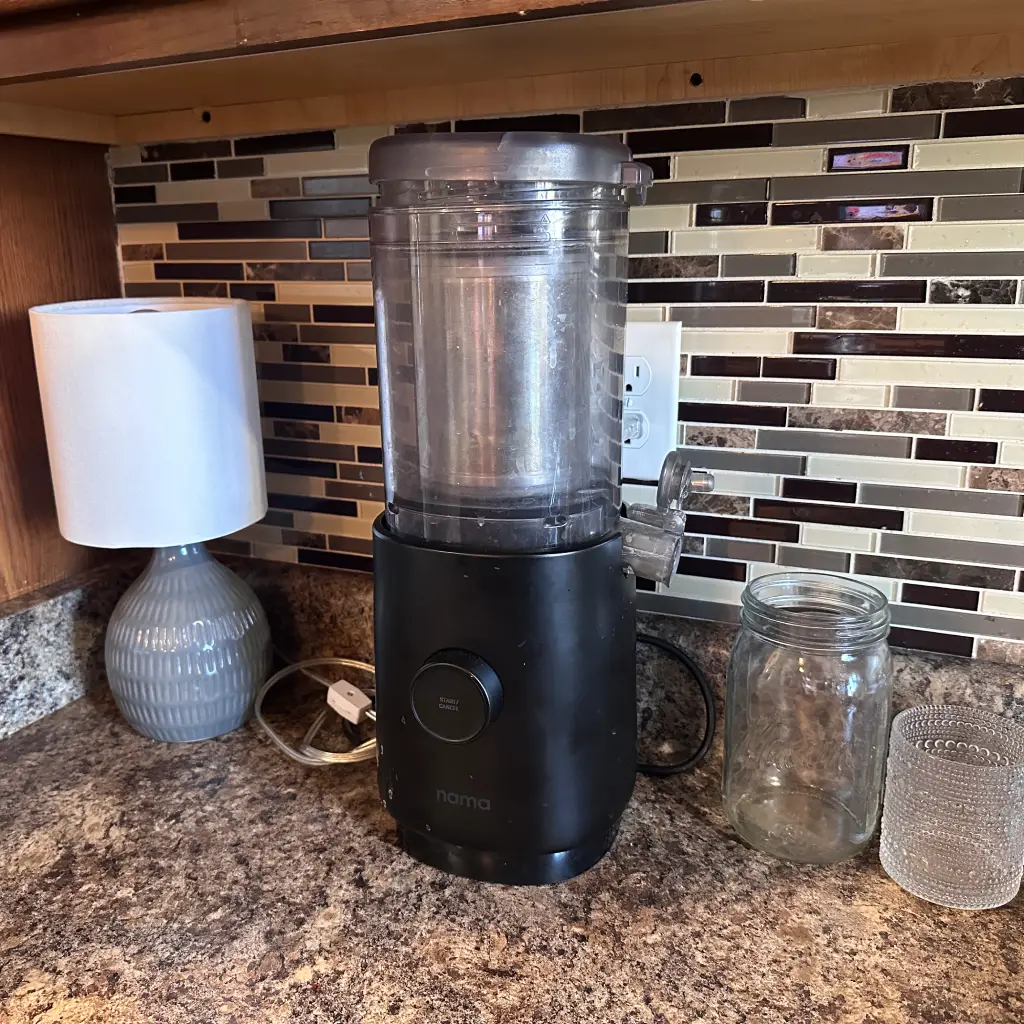
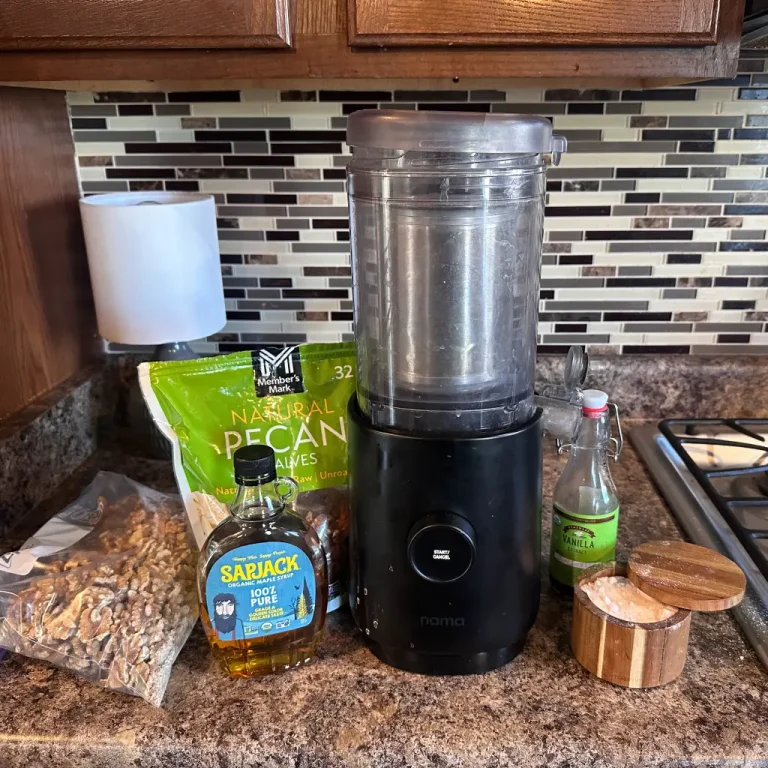
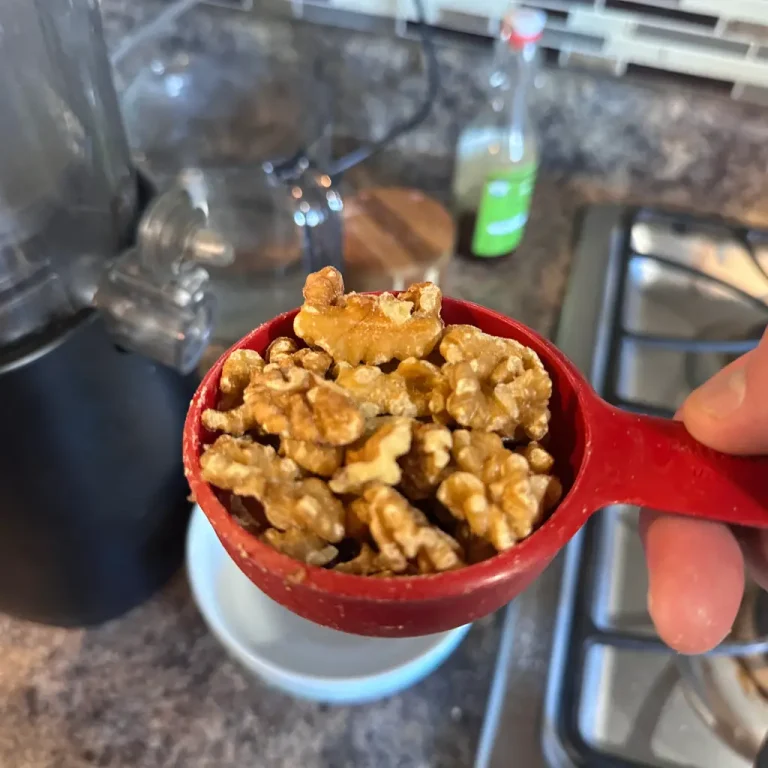
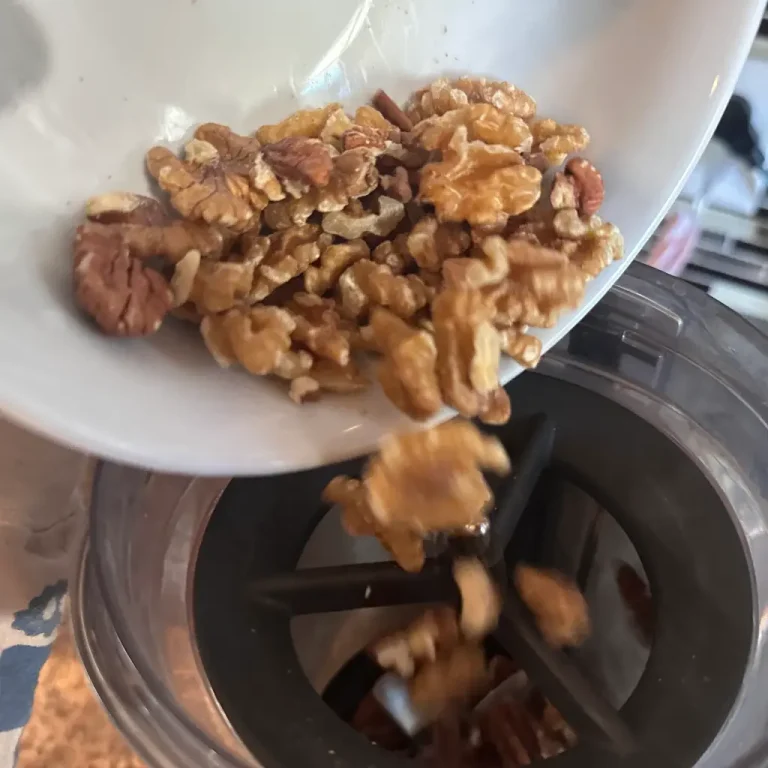
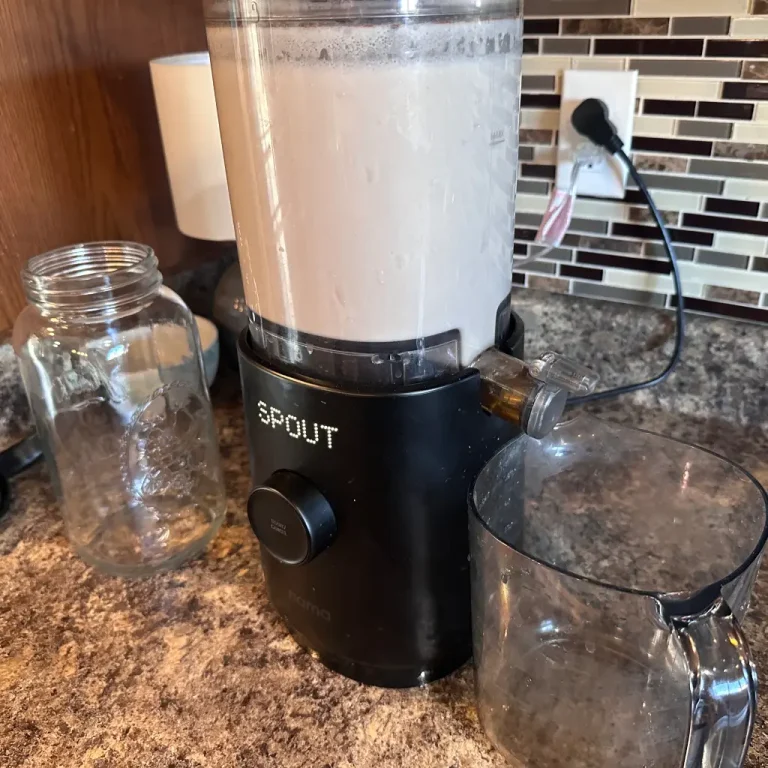
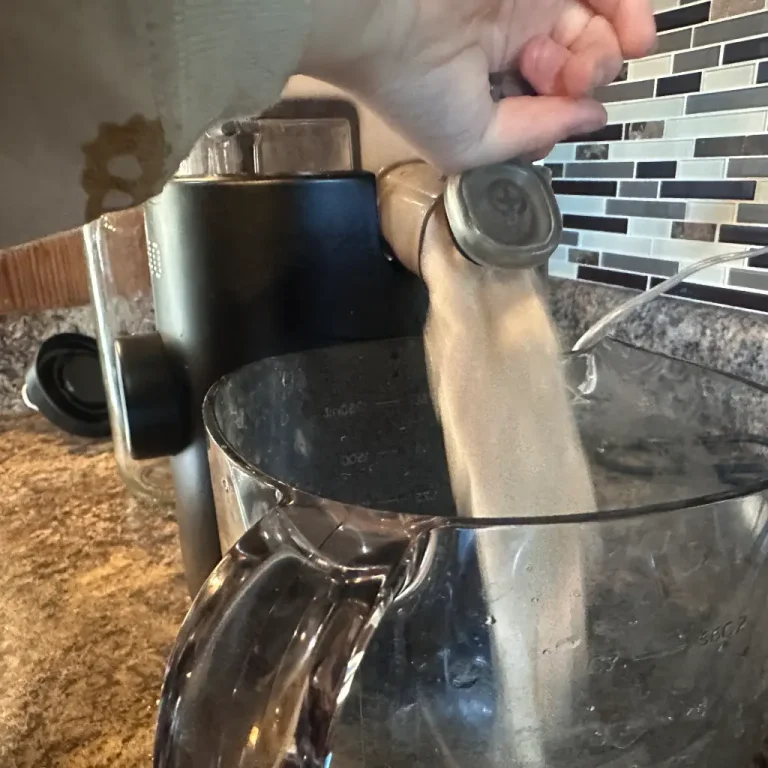
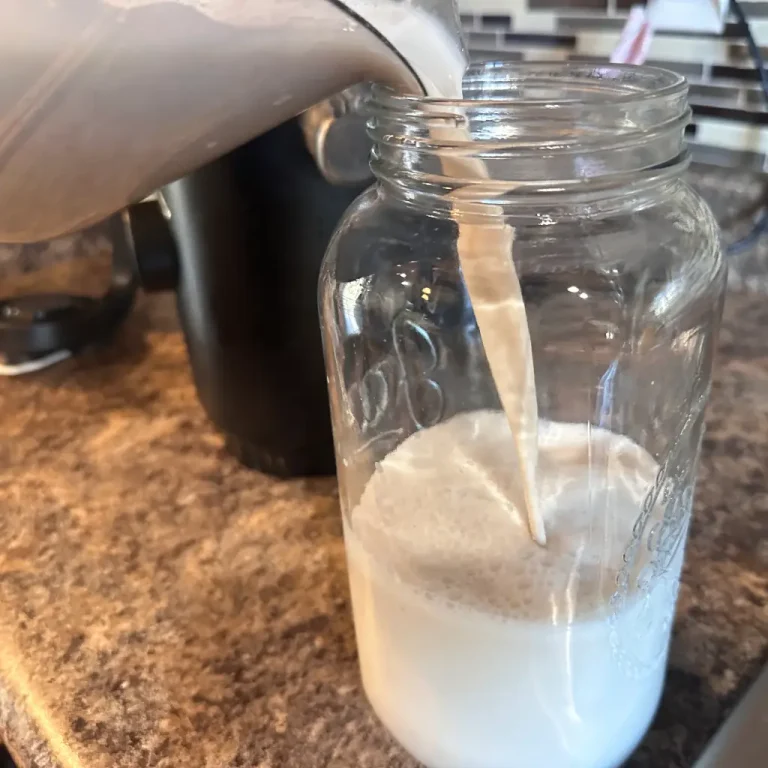
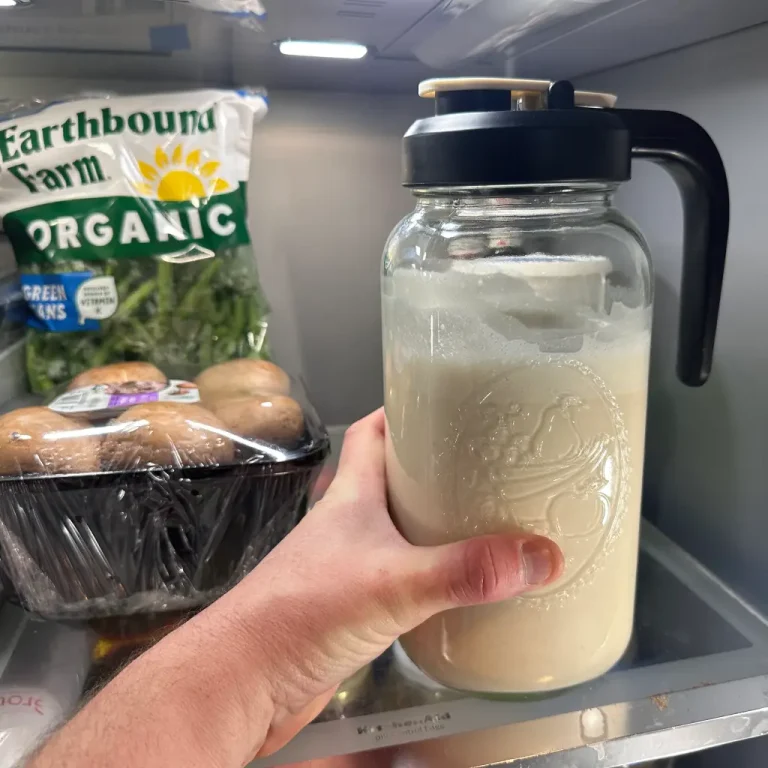
Fresh plant-based milk in under two minutes, no soaking, no straining, no nut milk bag
We started making our own plant milk a year ago and went through the whole blender + nut milk bag routine a hundred times before getting the M1 milk maker. The difference is very significant. With the M1, you add your ingredients, press the start button, and two minutes later you have fresh almond, oat, coconut, cashew (and whatever else you can think of) milk. No straining, no nut milk bag cleanup drama, and no excuses not to make nut milk. And our toddler wanted to mention, “yummy milk.”
- Fresh plant-based milk in under 2 minutes
- No soaking, no straining, no nut milk bag required
- Works with almonds, oats, cashews, coconut, and more
- Easy cleanup — most parts rinse in seconds
- Use code JOHNSONSM1 for the best available discount
Nama M1 at a Glance
What it does, how it works, and what makes it different from just using a blender.
- Made specifically for homemade plant milk (not a repurposed blender)
- 2-minute plant milk from start to finish
- Includes built-in filter/strainer which means no nut milk bag, no straining step
- No soaking nuts required before use (but helpful if you have digestive issues)
- Works with almonds, oats, cashews, coconut, macadamia, hemp, and more!
- Produces dry pulp you can use in baking or cooking
- Fits on countertop nicely
- Easy to clean (only 3 parts to wash… blade, mesh filter, chamber)
- Use code JOHNSONSM1 for the best available M1 discount
Watch the M1 in Action
Short on time? Check out Nama’s demonstration of how the Nama M1 milk maker works. It’s quite impressive!

How the Nama M1 Works
The M1 is a dedicated plant milk maker, not a blender with a fancy new label. That distinction matters more than it sounds.
With a regular blender, making nut milk means blending, then straining through a nut milk bag, then squeezing the life out of the bag, then cleaning a bag covered in wet pulp. It works, but it’s enough of an irritant that a lot of people do it once and go back to buying cartons.
Side note: the M1 doesn’t make soy milk (because soy beans are really hard and need a lot more processing)… so we buy that. But literally every other milk we make is done in our kitchen using the M1.
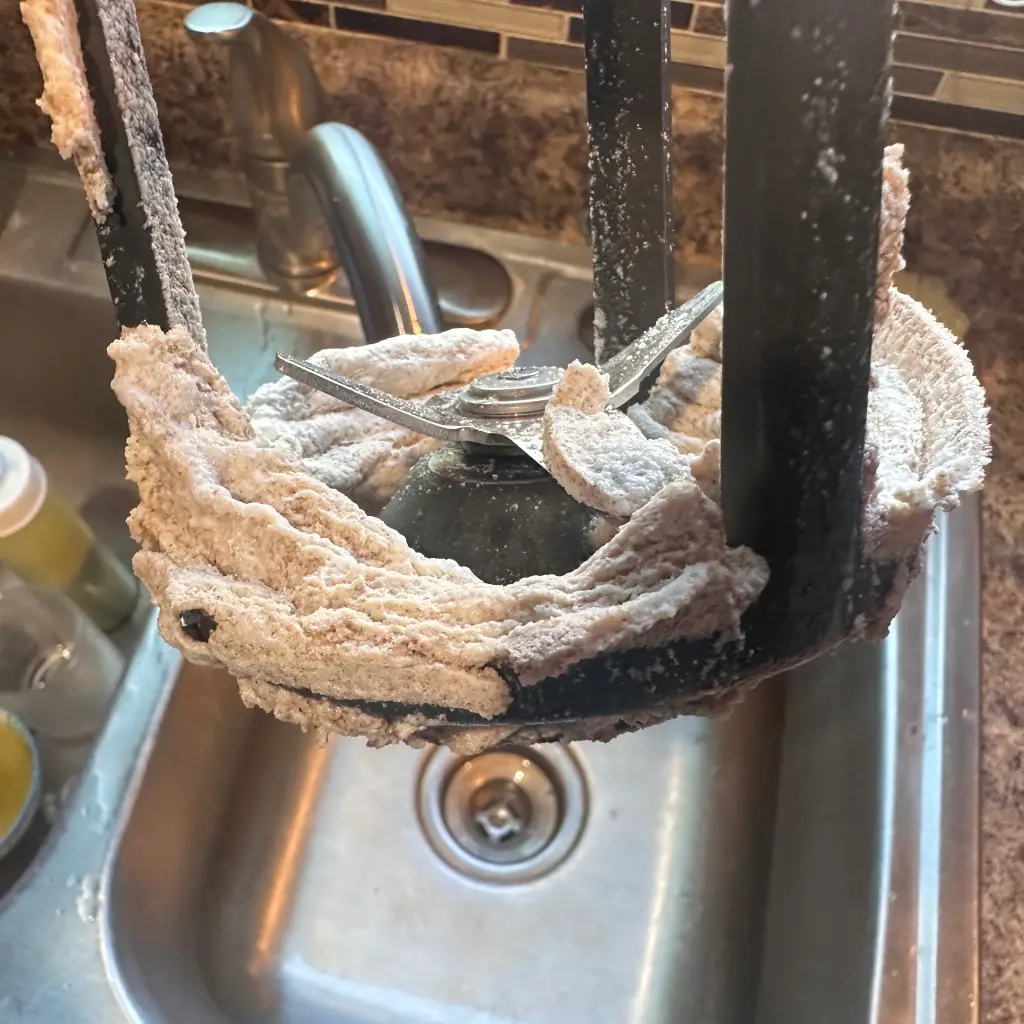
Pulp build-up left on Nama M1 blade
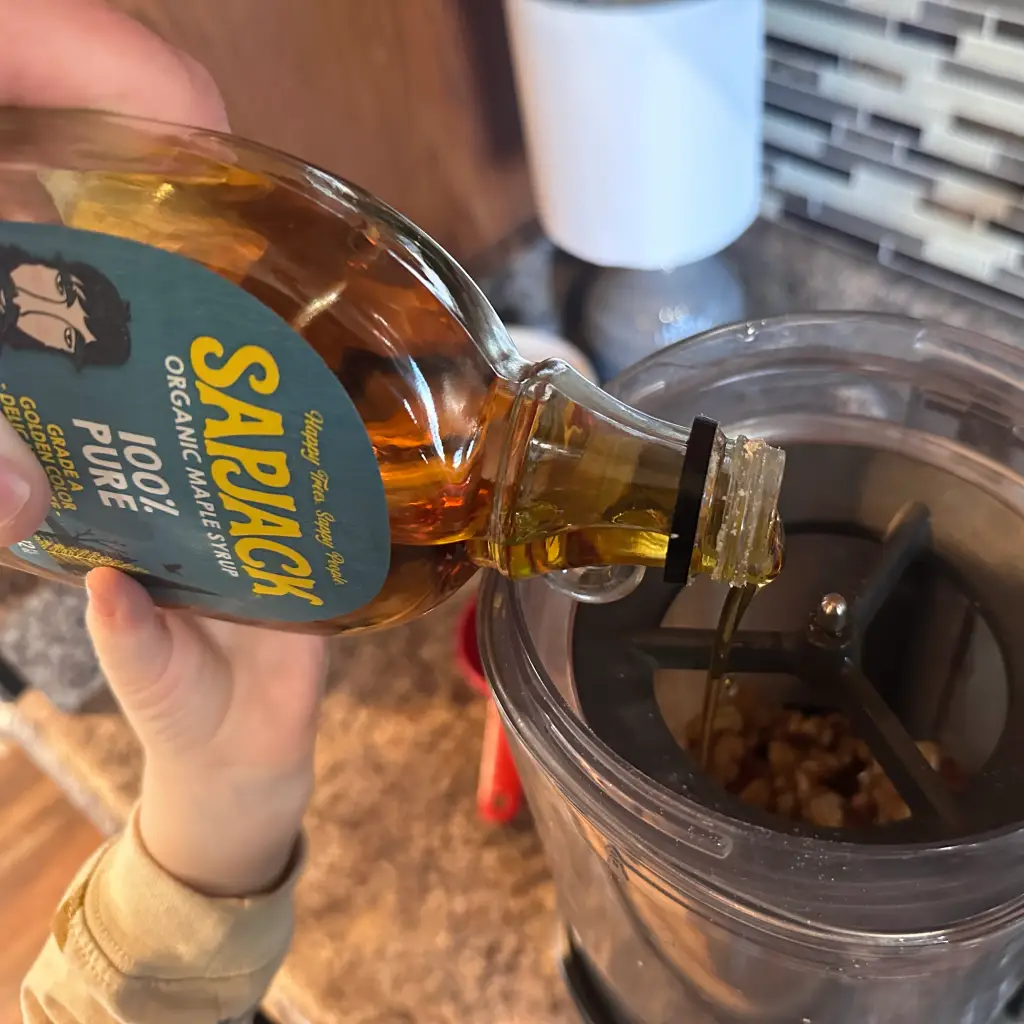
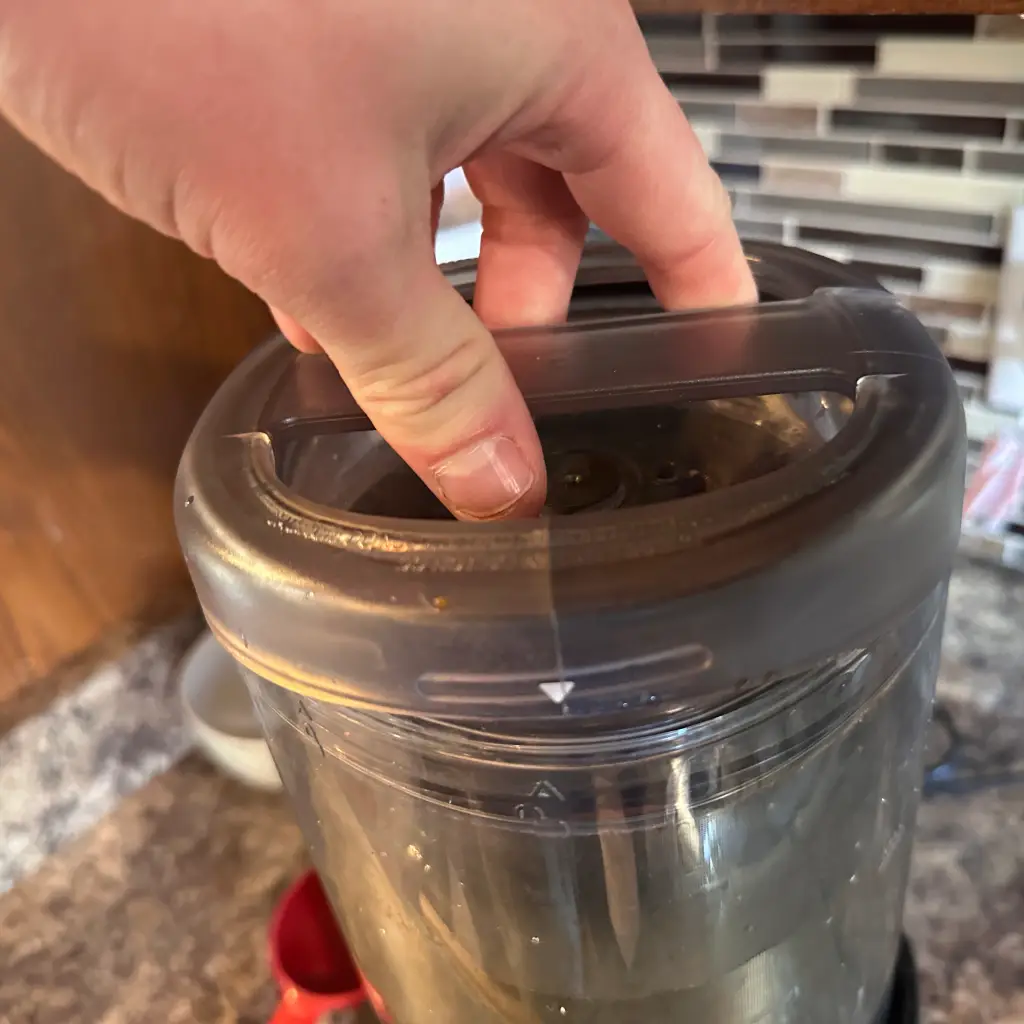
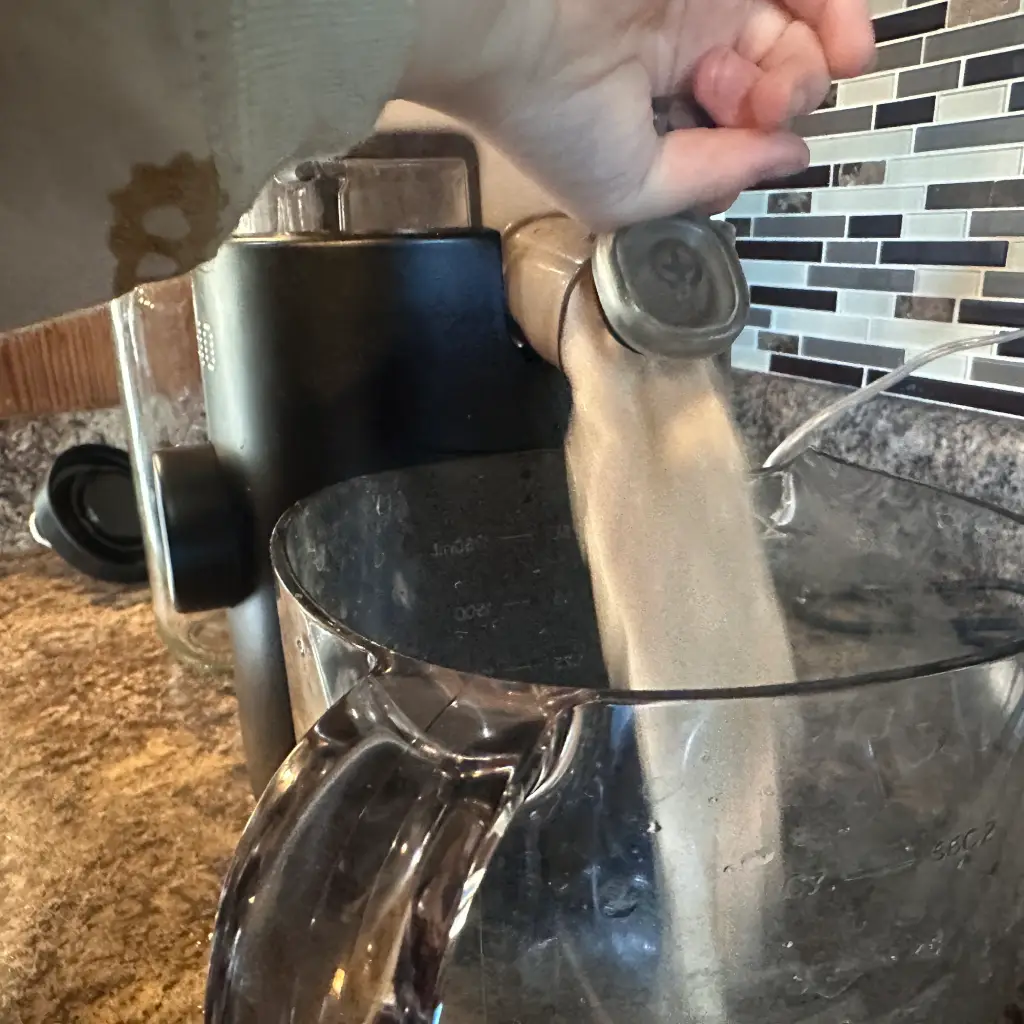
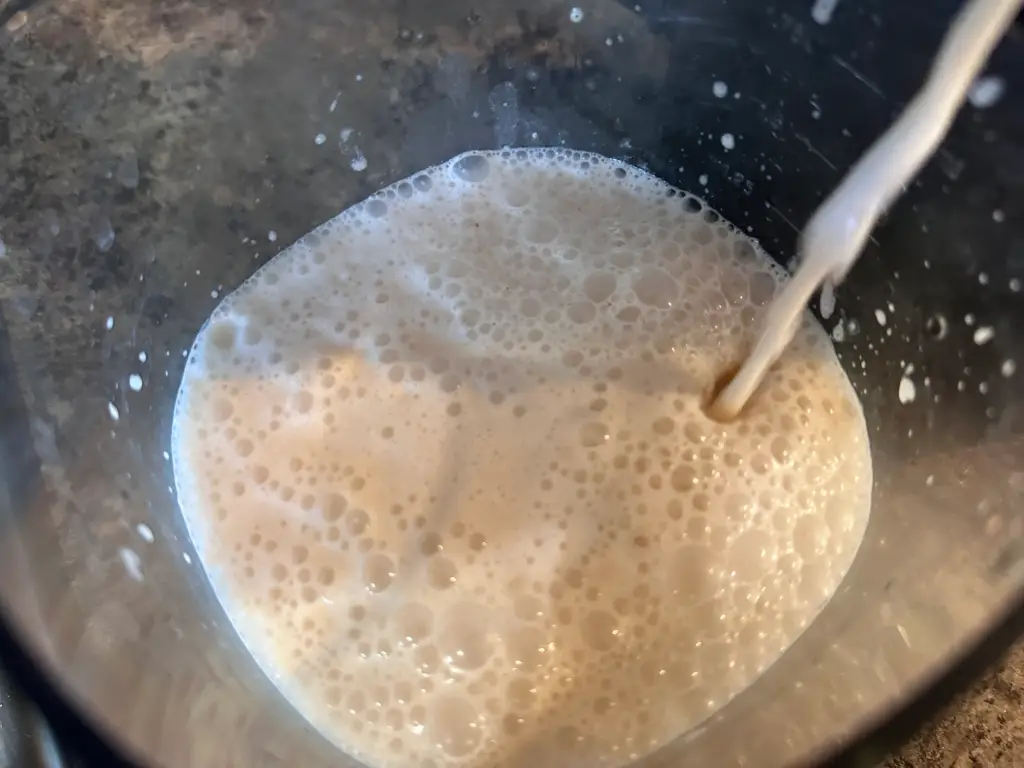
The M1 handles the whole process internally. You add your ingredients and water to the chamber, close the lid, and press the start button. A high-speed blade and built-in strainer blend and strain at the same time. Two minutes later, fresh milk comes out the spout and dry pulp stays in the chamber.
It’s a beautiful machine.
That is the whole process. There is no separate straining step. The pulp comes out a little wet but still usable in baking (or tossing into the trash). Ideally, we’d always have a way to use the leftovers but sometimes we don’t. Cleanup is rinsing the chamber, filter/strainer, and blade and takes only a few minutes at the sink.
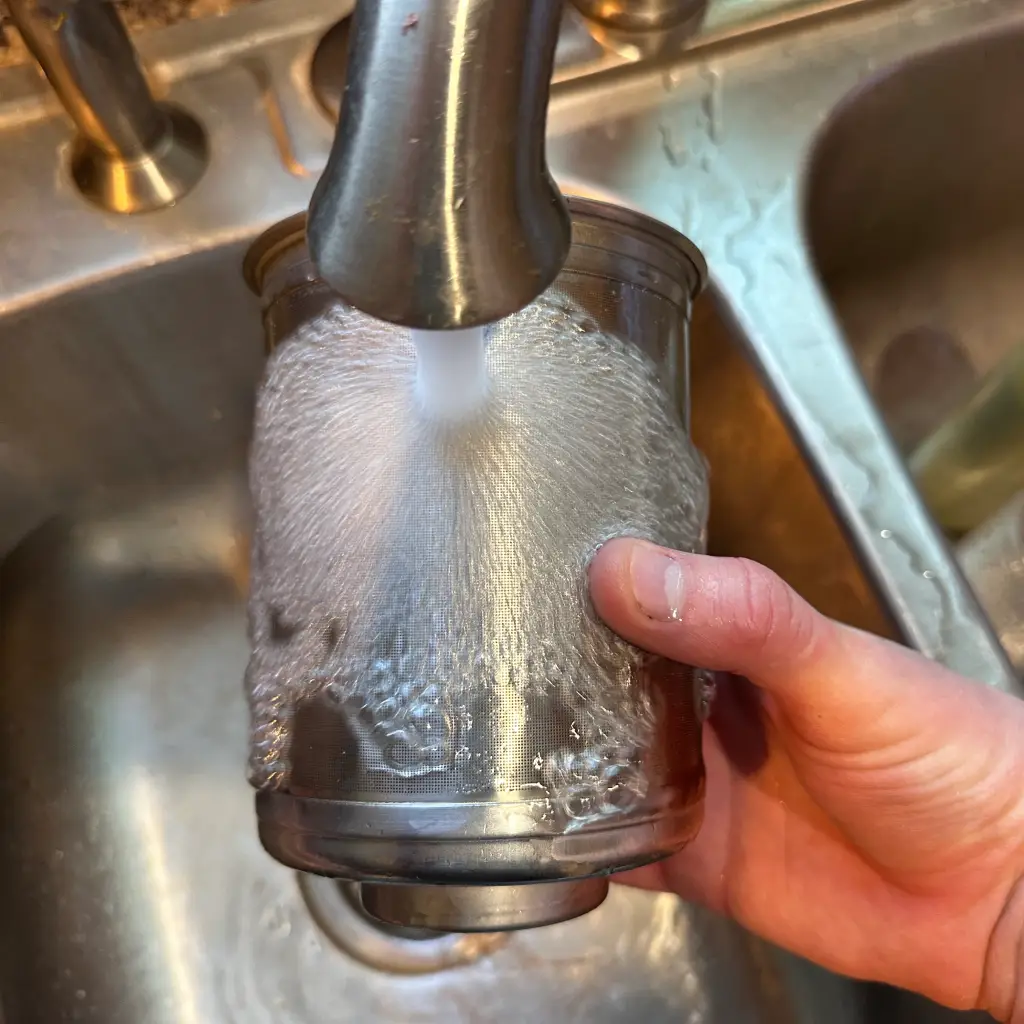
Rinsing the strainer/filter under water for initial clean of M1
It is the kind of thing where once you have used it a few times, going back to the blender-and-nut-milk-bag method feels unnecessary.
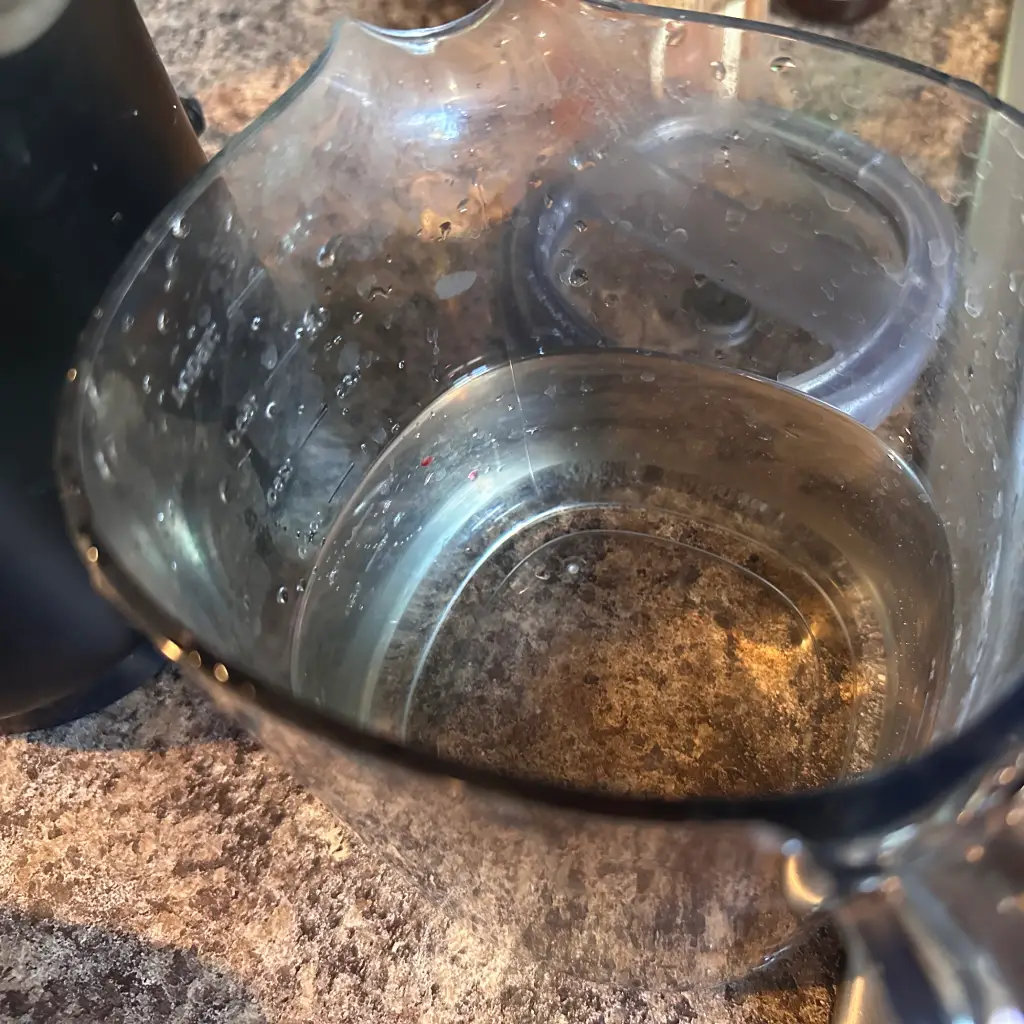
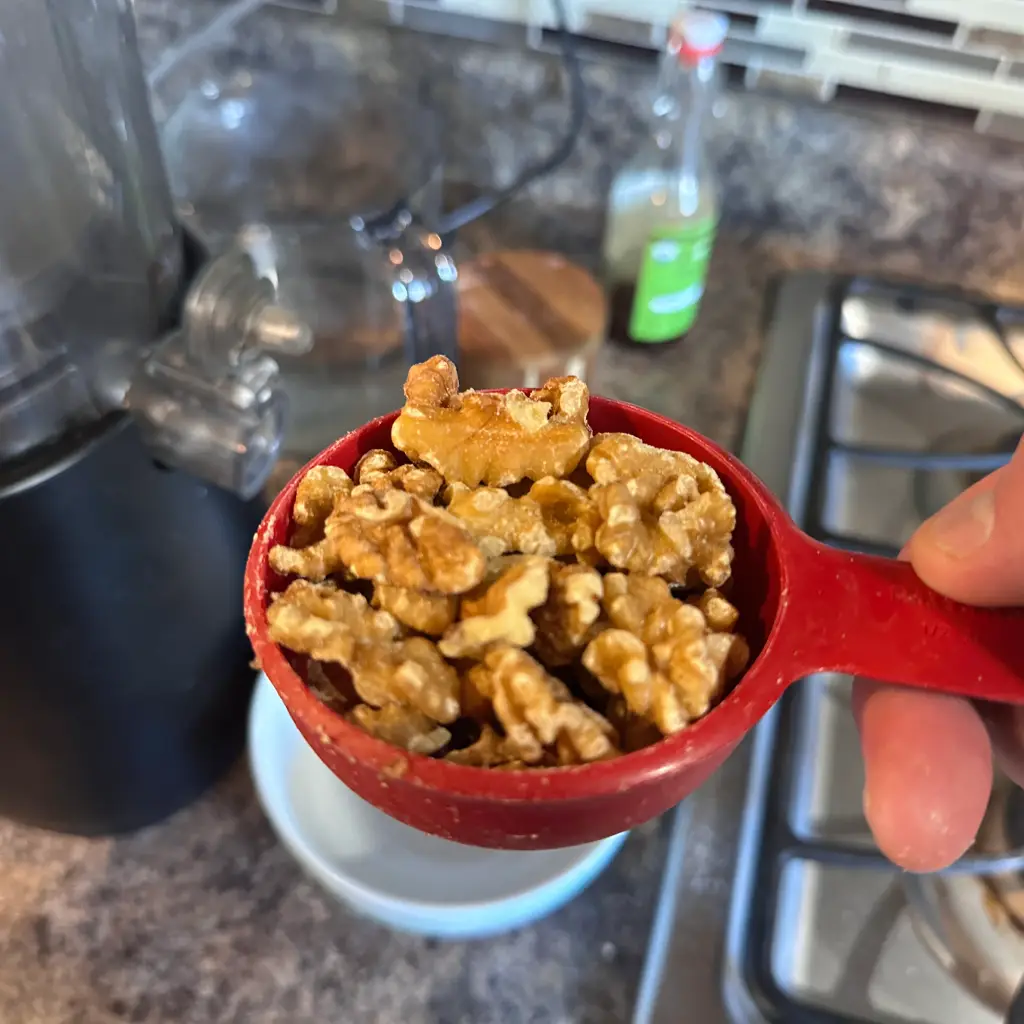
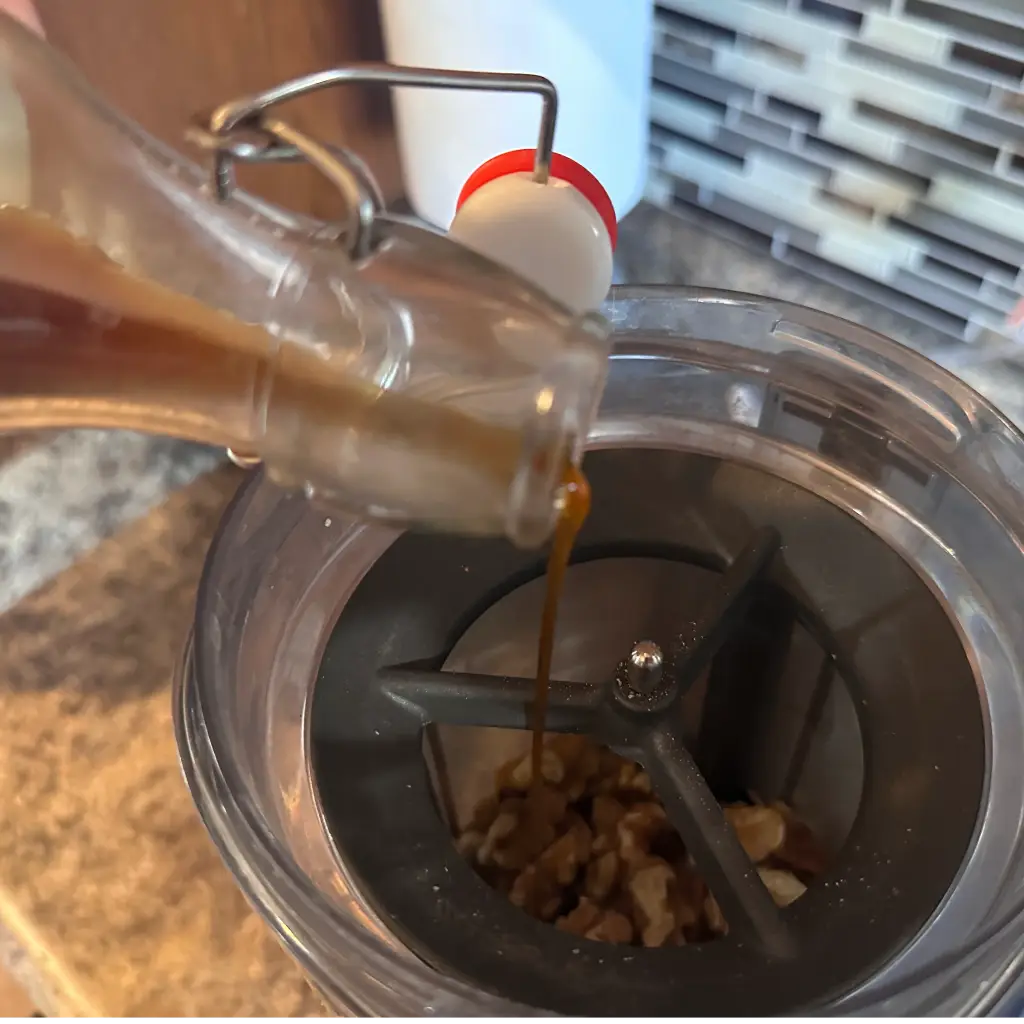
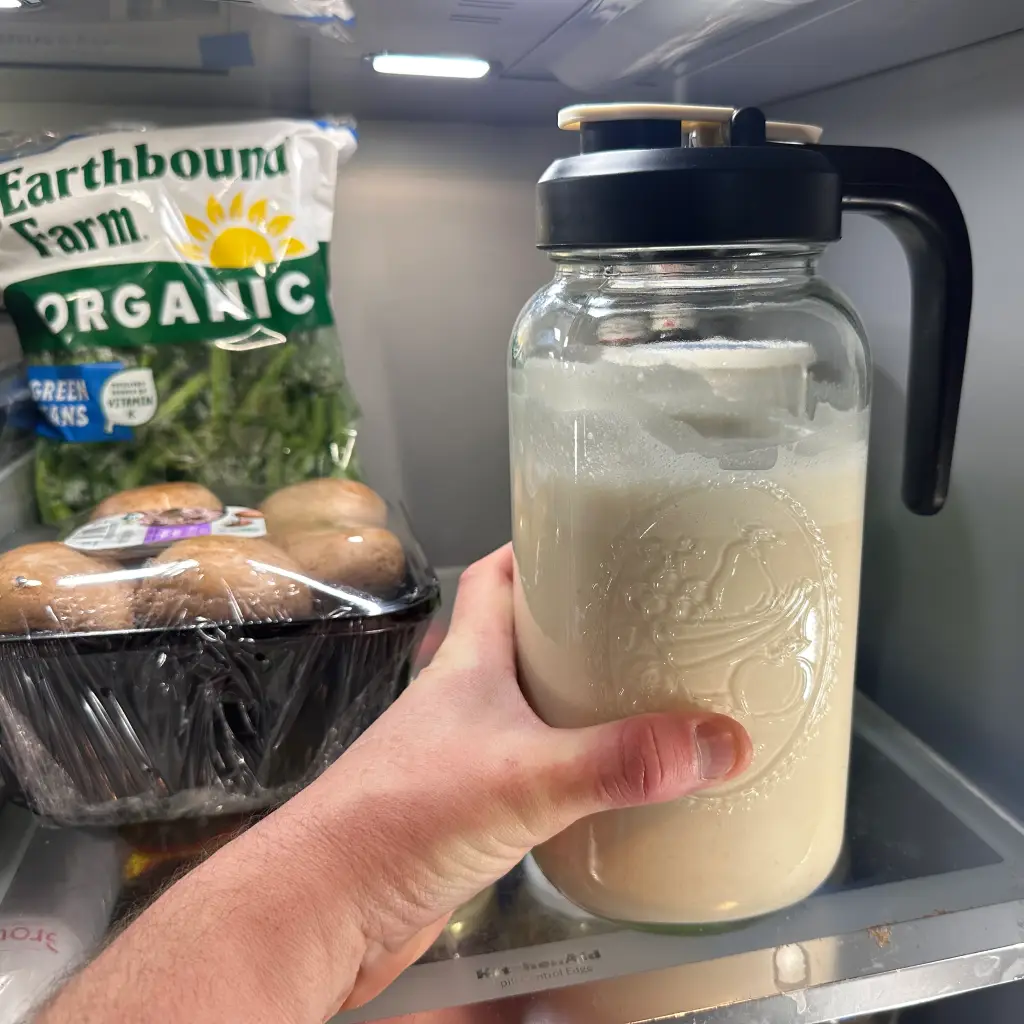
The M1 in Our Kitchen
We use the M1 several times a week. Sarah used to make coconut milk for coffee but since she’s 8 months pregnant (at the time of writing this) she uses the coconut milk for cereal and hot chocolate, oat/almond milk for smoothies/cereal (have you tried our chocolate almond milk recipe yet?), cashew milk when we want something creamier for a recipe. The machine sits on the counter 24/7 and actually gets used, which, honestly, is not something you can say about every appliance we have bought.
The milk output is noticeably fresher and whiter than anything from a carton and you really can taste the difference because you know exactly what’s in it… because you put it in yourself. No gums, no added oils, no ingredients you have to look up. Water, nuts, dates/maple syrup, vanilla. That’s it.
Cleanup takes maybe two minutes if you rinse it right after use. The strainer/filter needs a quick brush under running water every few batches but it’s really no big deal.
You can place your cleaned parts on a dishrag to air dry (you know, us guys LOVE air drying lol) or dry with a clean towel and place the parts back together for your next milk making recipe.
Storage of milk is super simple. Make sure the container used is air tight and placed with the milk in the fridge. The milk will stay its best for about 3 days. After that, you can push it to 5 but anything after 5 you’re on your own. Have you read our medical disclaimer by change? HAHA
Nama M1 Specs
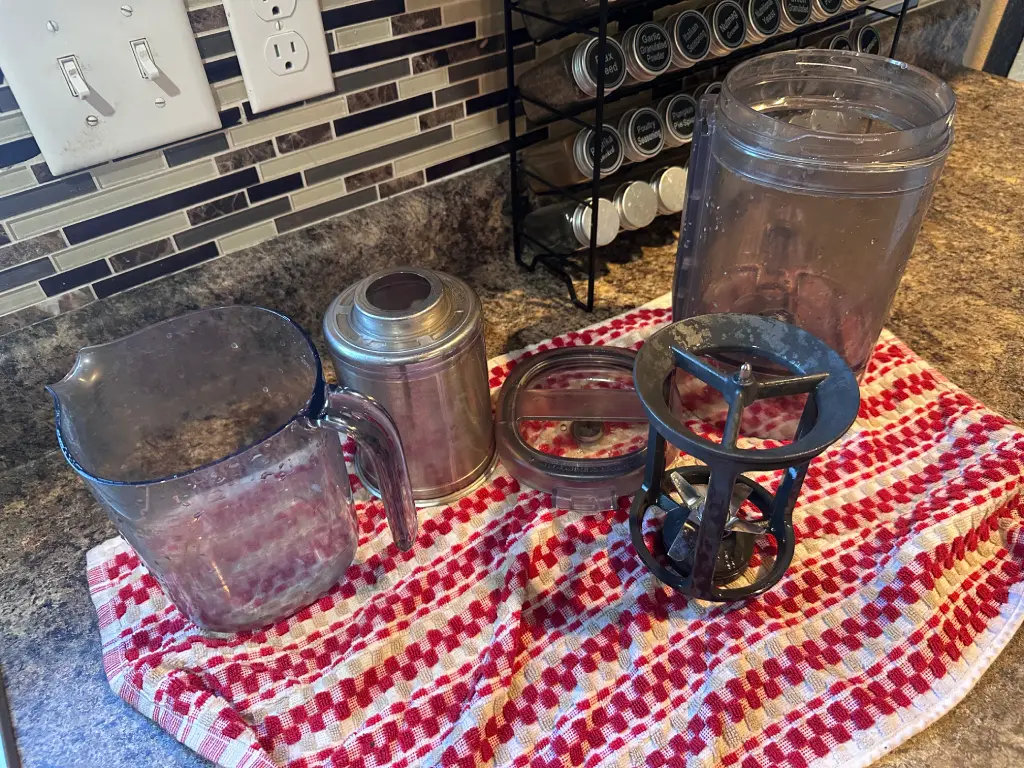
All Nama M1 parts are cleaned and air drying
- Appliance Type: Dedicated plant-based milk maker
- Milk Cycle Time: Under 2 minutes
- Filter System: Built-in strainer (no nut milk bag required)
- Soaking Required: No (but soaking works too)
- Compatible Ingredients: Almonds, oats, cashews, coconut, macadamia, hemp, and more
- Pulp Output: Dry and can be used in baking or discarded
- Dishwasher Safe Parts: No (check manual for specifics)
- Warranty: 15 years
- Best Discount Code: JOHNSONSM1
Nama M1 Pros and Cons
After using this regularly, here is the honest breakdown.
Pros
- 2 minutes from ingredients to fresh milk (it’s SO much faster than using a nut milk bag)
- No nut milk bag, no straining, no squeezing wet pulp
- No soaking required, but you can soak for easier digestion
- Output is consistently smooth and creamy across different ingredients
- You control what goes in: no gums, oils, or additives
- Dry pulp output is actually usable in baking, not just wet compost
- Cleanup is genuinely quick, takes Michael 2 minutes
Cons
- Fresh milk has a shorter shelf life than store-bought… usually 3 to 5 days refrigerated
- You need to keep nuts or grains stocked… obvious, but easy to underestimate if you use it daily
- The pulp doesn’t come out bone dry so don’t expect almond/oat/cashew “flour”
- Getting your preferred flavor and consistency dialed in takes a few batches of trial and error
What You Can Make With the M1
The M1 is not limited to almond milk. Pretty much any nut, seed, or grain that works for plant milk works in the M1. Except soy milk. Soy beans are too hard and require lots of prep work.
But for most people, almond milk is the obvious starting point; it’s got a clean flavor, good texture, works in coffee and cereal. Oat milk comes out creamy and mild, great for lattes. The trick with oat milk is making sure you get the right water-to-oats ratio.
Freshly made nut milk
Cashew milk is richer and thicker, which makes it better for cooking or adding to recipes where you want more body. Coconut milk from shredded coconut is surprisingly easy and tastes nothing like the canned version.
You can also do macadamia, hemp seed, pecan, and blends of multiple ingredients. Once you have the ratio down for a base recipe, experimenting with flavors like adding dates, vanilla, cinnamon, or a pinch of salt takes about 30 extra seconds.
We have a collection of M1 recipes on the site if you want somewhere to start.
Three Simple Recipes to Make First
These are the three we make most often. All ratios are per batch in the M1.
Almond Milk: 1 cup raw almonds, 3 cups water, 2 Medjool dates, 1 tsp vanilla extract, pinch of salt.
Oat Milk: 1 cup rolled oats, 3 cups water, 3 Medjool dates, 1 tsp vanilla extract, pinch of salt.
Coconut Milk: 1 cup shredded coconut, 4 cups water, 3 Medjool dates, 1 tsp vanilla extract, pinch of salt.
No soaking needed for any of these. Add the ingredients, close the lid, press the start button. Adjust sweetness and vanilla to taste after your first batch.
What Customers Are Saying
Here are some actual reviews from verified Nama M1 customers:
I love this milk maker so much. It’s so quick and easy to use, easy to clean, and I love that I can completely customize my milks to my liking.
 Verified Buyer
I love this machine. I can make the plant milks I like, and know exactly what’s in them which is very important to me.
Verified BuyerEverything tastes amazing and it’s great to know exactly what the ingredients are. The machine is quiet, effective and clean up is easy. I highly recommend this for anyone who enjoys their non dairy options…. its a game changer!
Verified BuyerSave on the Nama M1
Use code JOHNSONSM1 at checkout on namawell.com for the best available discount on the M1. This is a different code from the general JOHNSONS code, JOHNSONSM1 is specific to the M1 and gives you the best savings on this machine. Only one code per order. Does not apply on Amazon.
Nama M1 Frequently Asked Questions
No. The M1 is designed to work with dry, unsoaked nuts and grains. That is one of the things that sets it apart from the blender-and-nut-bag method, where soaking is usually recommended for a smoother result.
No, none of the parts are dishwasher safe, but don’t worry, rinsing right after use is the easiest way to keep cleanup quick regardless.
Generally 3 to 5 days refrigerated in a sealed container. Exact shelf life depends on the ingredient. Oat milk tends to separate faster than nut milks so give it a shake before use (with the lid on, obviously :)).
15 years. Same as the J2 and C2. Nama backs the M1 with the same long-term warranty as their juicer lineup.
The M1 makes the milk base. From there, you can follow a standard non-dairy yogurt recipe using active cultures. The M1 itself is not a fermentation device, but it handles the first step well.
The main differences are speed and cleanup. A blender requires a separate straining step with a nut milk bag/large bowl, which adds time and mess. The M1 blends and strains in one cycle with no bag. The output is also consistently smoother because the built-in filter/strainer does a better job than hand-squeezing.
Final Verdict
We gave the M1 a 5 out of 5 because it’s worth it. If making plant milk at home is something you want to do consistently (not just a one-and-done thing), this is the machine that actually makes it stick as a habit.
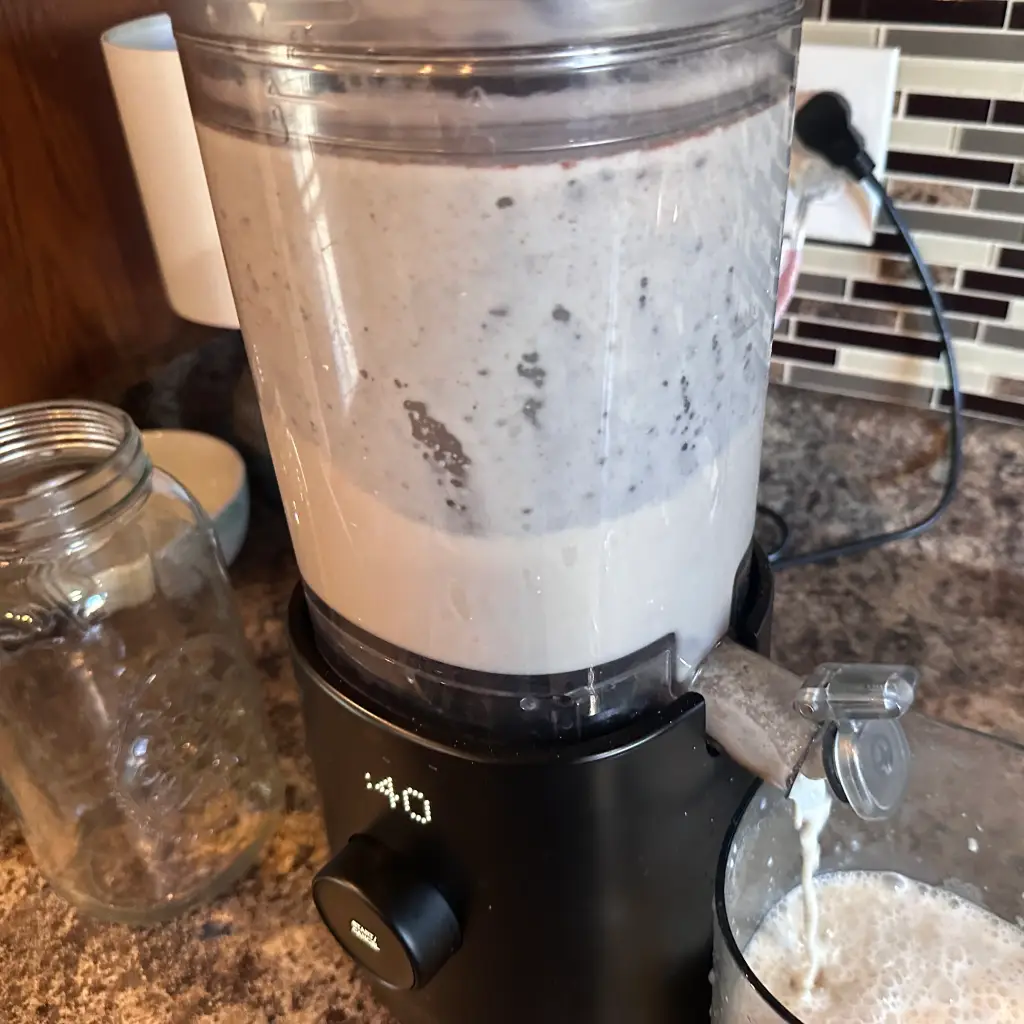
Watching the strainer spin to get every last drop of milk into the pitcher
The blender-and-bag method works, but it’s annoying enough that most people eventually stop. The M1 removes that annoyance entirely. Two minutes, press a button, done. That is the real value here.
It is not for everyone. If you only occasionally want plant milk, buying a carton is probably still the easier path. But if you are buying oat milk or almond milk every week, the M1 pays for itself pretty quickly (about a year)… and the fresh version is noticeably better (and better for you).