
Homemade Almond Milk Recipe
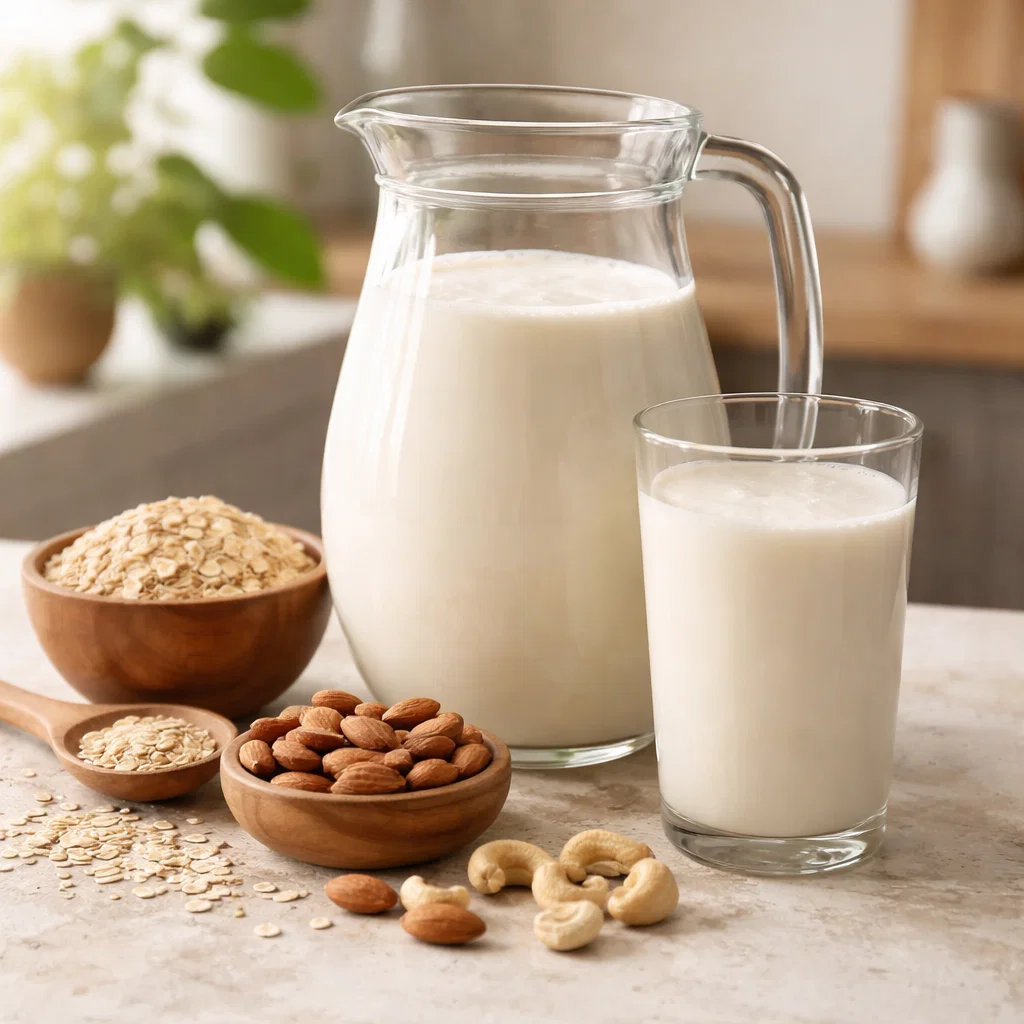
Learn how to make almond milk at home using a few simple ingredients. Our homemade almond milk recipe uses almonds (obviously lol) and water to create fresh, dairy-free milk that tastes cleaner than store-bought almond milks.
Key Takeaways
The base almond milk recipe is almonds & water, then you can add anything else you like to it (dates, vanilla, cocoa powder, etc).
Unlike store-bought almond milk, fresh almond milk has a clean almond taste and no fillers. Whether you use a high-speed blender, food processor, or dedicated nut milk maker (yes, those exist), this nut milk recipe is really easy to make.
- Make almond milk at home with raw almonds, fresh water, and a blender (or milk making machine like Nama M1 or Almond Cow)
- Soaking almonds overnight helps reduce phytic acid and improves texture (but not always necessary)
- Strain using a nut milk bag or cheesecloth for smooth almond milk
- Leftover almond pulp can be saved for baked goods
- Homemade almond milk tends to separate but stays fresh when refrigerated

Ingredients for Homemade Almond Milk
To make this almond milk recipe, you only need a few basic ingredients. Using raw almonds and fresh water creates almond milk that’s smooth, lightly sweet, and perfect for recipes that call for dairy-free milk.
1 cup of almonds, raw or blanched almonds
2 to 4 cups of water, depending on thickness
1 to 2 Medjool dates for sweetness, optional
1 tsp vanilla extract
Optional: 2-4 Tbsp cocoa powder to make chocolate almond milk
Almond Milk Recipe
Equipment
- 1 Nama M1 Milk Maker or Almond Cow Not required, but makes your life easier
- 1 Blender If not using milk maker
- 1 Food Processor If not using a blender
Ingredients
- 2-4 Cups Water
- 1 Cup Almonds (whole or sliced) Soaked for 8 hours (if using a blender or food processor)
- 1-2 Medjool Dates Optional, for sweetness
- 1 tsp Vanilla Extract
- 2 Tbsp Cocoa Powder If choosing to make chocolate almond milk
Instructions
- If you're using the Nama M1 Plant-based Milk Maker, combine all ingredients and turn the machine on. It will tell you when to open the spout. Takes 2 minutes!
- If using a blender or food processor, add all ingredients and turn the machine on.
- Let machine run for 1 min on high.
- Strain contents using a nut milk bag or cheesecloth.
- Use leftover pulp in smoothie recipes or dry to make almond flour.
- Store milk in airtight/sealed container in fridge.
- Milk will last 3-4 days.
How to Make Almond Milk at Home
If you’re using a specialty nut milk maker, like the Nama M1 plant-based milk maker, then you can ignore the following instructions. With the M1, you simply add your ingredients to the machine, turn it on, and enjoy!
If you’re not using a machine like the M1 or Almond Cow, here’s what to do…

Soak the almonds
Place raw almonds in a bowl and cover with fresh water. Soak almonds overnight or for at least 8 hours. Soaking water helps soften the almonds and reduces phytic acid. Drain the almonds and rinse well with fresh water before blending.
Don’t like soaking your almonds before hand? Check out our review of the Nama M1 Plant-based Milk Maker (saves 8 hours).
Use a Blender or Food Processor and Blend Until Smooth
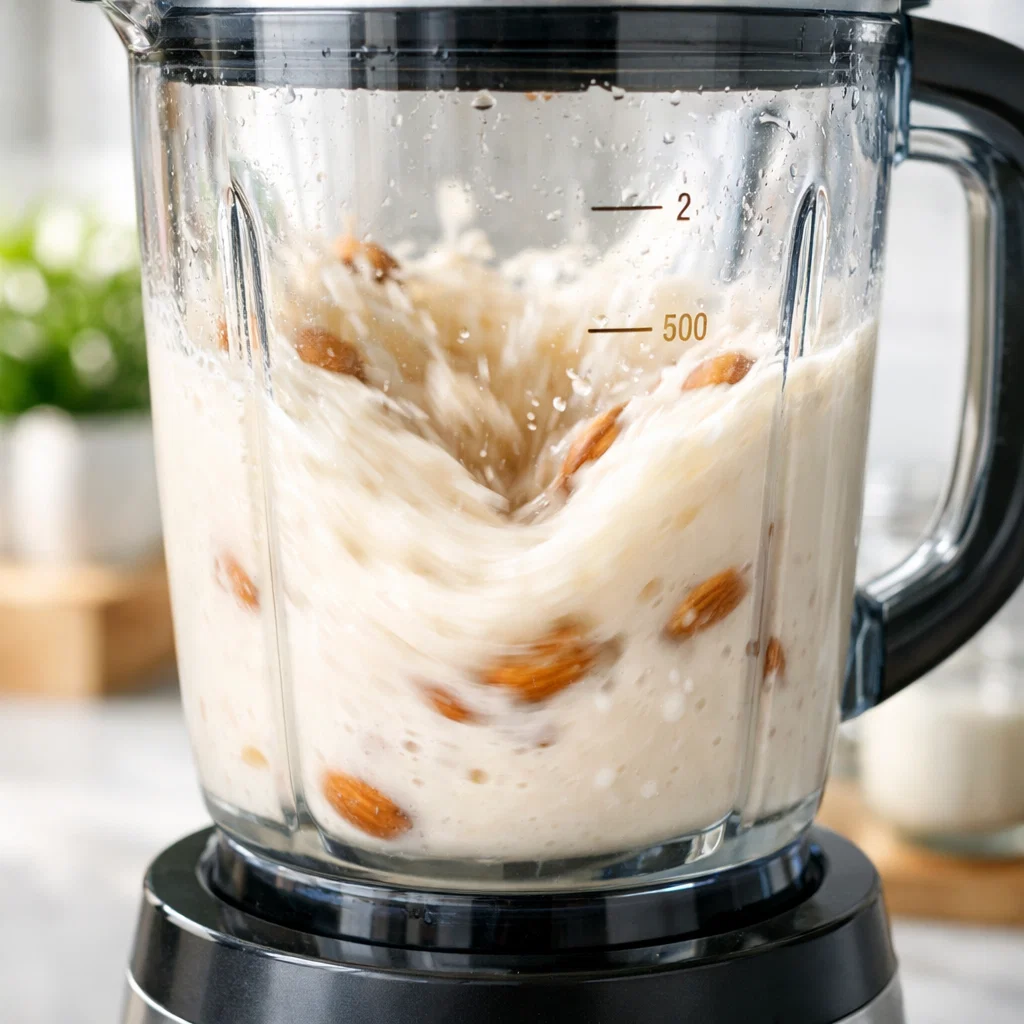
Add the soaked almonds to a high-speed blender or Vitamix. Pour in 2 cups of water for thicker almond milk or up to 4 cups of water for a lighter milk recipe. Blend until creamy and smooth, about 30 to 60 seconds, until the almond mixture looks fully combined.

Strain Using a Nut Milk Bag
Place a nut milk bag or cheesecloth over a bowl. Our preferred nut milk bag comes from Ellie’s Best and they’re about $10 on Amazon. Pour the almond milk through the bag and gently squeeze to strain the almonds. The liquid is fresh almond milk. The remaining almond pulp can be discarded, but why would you discard perfectly usable pulp? Check out ways to use the leftover almond pulp.

Refrigerate and store
Pour the almond milk into a sealed container or glass jar and place it in the refrigerator. Because this is a homemade almond milk recipe with no stabilizers, the almond milk tends to separate as it sits. Simply shake well before using. Fresh almond milk keeps for 3 to 4 days when refrigerated and is best enjoyed cold in smoothies, cereal, coffee, or recipes that call for dairy-free milk.
Tips for Making Homemade Almond Milk
Almond milk is one of the easiest plant-based milks to make. You can use whole almonds (or sliced almonds), whichever you prefer; the results are the same.
We have found it’s easier to make a batch of almond milk and store in the fridge for later use than to make and use the milk every time you want milk.
- Use fewer cups of water for a creamier almond milk
- Add dates for sweetness or leave unsweetened
- Strain twice if you want extra smooth milk
What to Do With Leftover Almond Pulp
Do not discard the leftover almond pulp unless you want to. Leftover almond pulp can be used in baked goods, added to oatmeal, or dried into almond meal. Many recipes call for almond flour, and while almond pulp is not exactly the same, it works well for adding fiber and almond flavor.
Remaining almond pulp can also be mixed into smoothies or used when making homemade almond butter in a food processor.
Frequently Asked Questions
If using the Nama M1 Milk Maker, no soaking is needed. If using a blender with a nut milk bag, yes; soak the almonds to improve texture and digestibility.
The M1 is the best machine for making nut milks, but unless you’re making milks often, it’s a bit pricey. Read our complete review of the Nama M1 here. Using a blender and nut milk bag/cheesecloth works just fine but we’ve found this method to be messier and a lot more frustrating.
Homemade almond milk has no stabilizers, so separation is normal.
Yes. Blanched almonds create almond milk with a milder almond taste.
Yes. Blend 1 cup of soaked almonds in 2-4 cups of water. Then use a nut milk bag or cheesecloth to strain the milk from the pulp. A high-speed blender, like Vitamix or Ninja, works best for this recipe.
Make Almond Milk Even Easier With the Nama M1
If you love making homemade almond milk but want a simpler, more consistent process, the Nama M1 Plant Based Milk Maker is built for exactly that. It removes the need for soaking, blending, and straining while still producing fresh almond milk with great texture and flavor. For anyone making almond milk regularly or experimenting with different nut milk recipes, the M1 turns a multi-step process into a push-button routine.
Save 10% on the Nama M1
If you are ready to upgrade from a blender and nut milk bag, check out the Nama M1 and see how it fits into your kitchen. Start making fresh plant-based milk at home with less effort and less mess.