Best Overall Juicer
#1
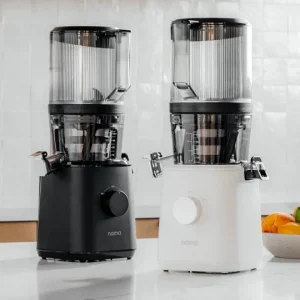
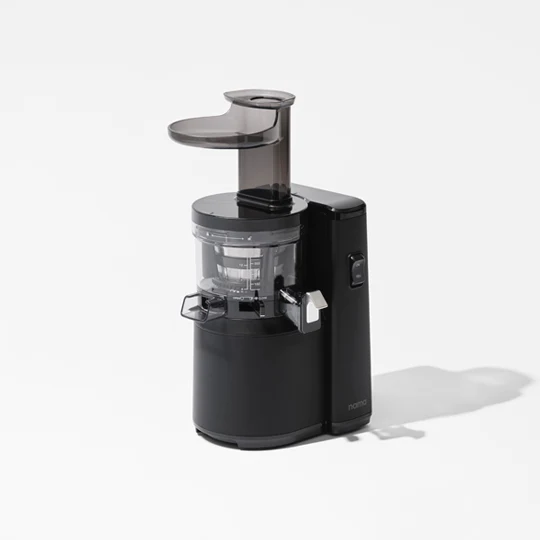
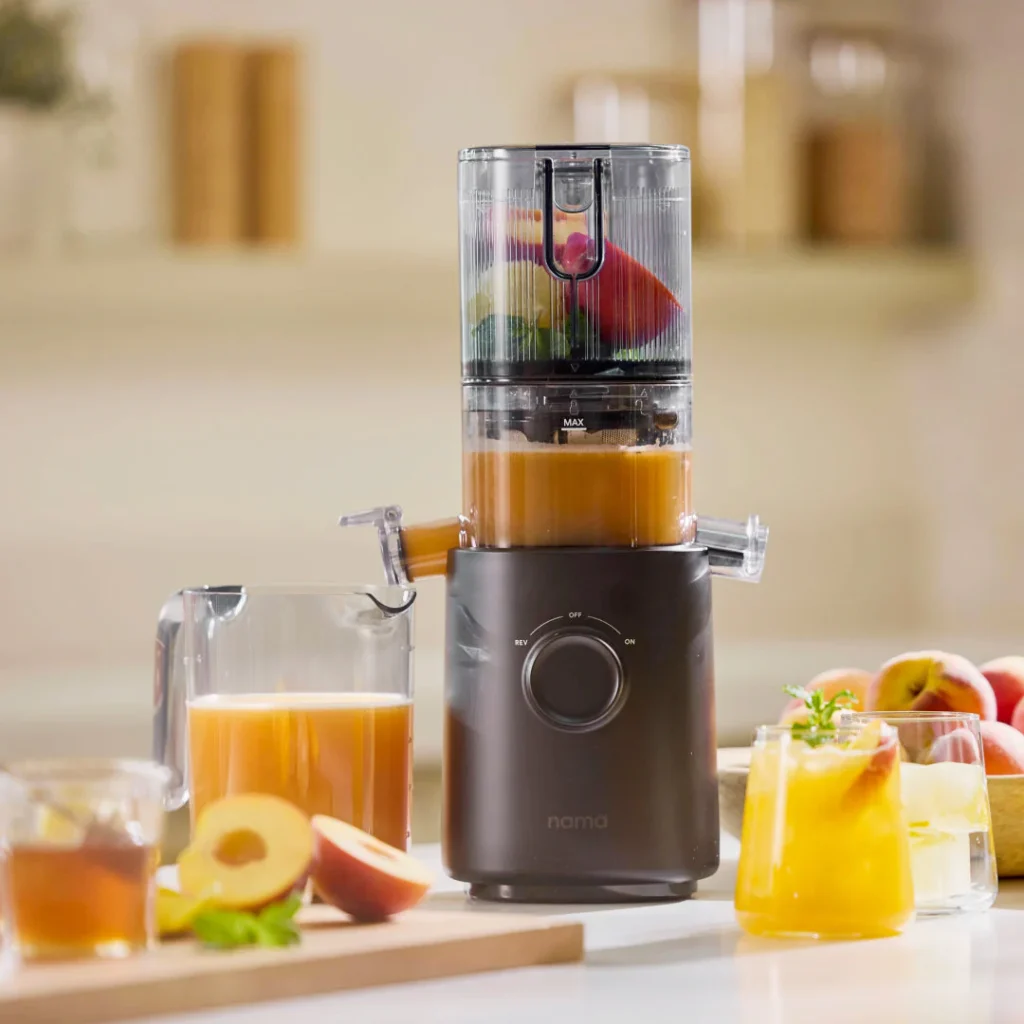
Nama J2 Juicer
- Best for Celery, Wheatgrass, Leafy Greens
- Up to 60% More Juice Than Competitors
- SUPER Quiet
- Uses Pure Press Technology to Retain Max Nutrients


If you want to make the best celery juice, a dedicated celery juicer’s essential. These juicers tackle celery’s fibrous nature, maximizing juice extraction and minimizing clogging.
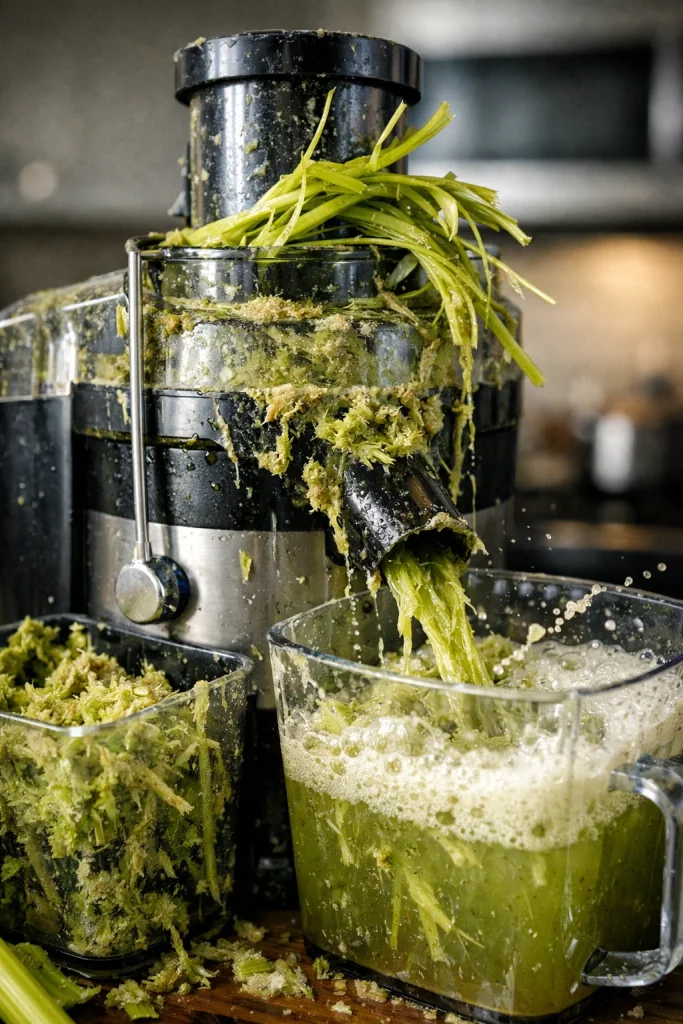
When it comes to juicing celery, using a specific celery juicer is essential because celery stalks are extremely fibrous and stringy.
Many juicers on the market—especially centrifugal juicers—struggle to properly handle celery, which often leads to clogging, excess pulp from the juice, and a lower amount of juice overall.
A juicer designed specifically for celery is built to slowly press celery to extract its juice, rather than shredding it, which results in smoother, pulp-free juice and higher juice extraction.
With a regular juicer or when using a blender to make celery juice, you may end up with thick foam, leftover fibers, or juice that separates quickly.
Using a blender also requires straining, which removes some of the nutritious juice and adds extra steps.
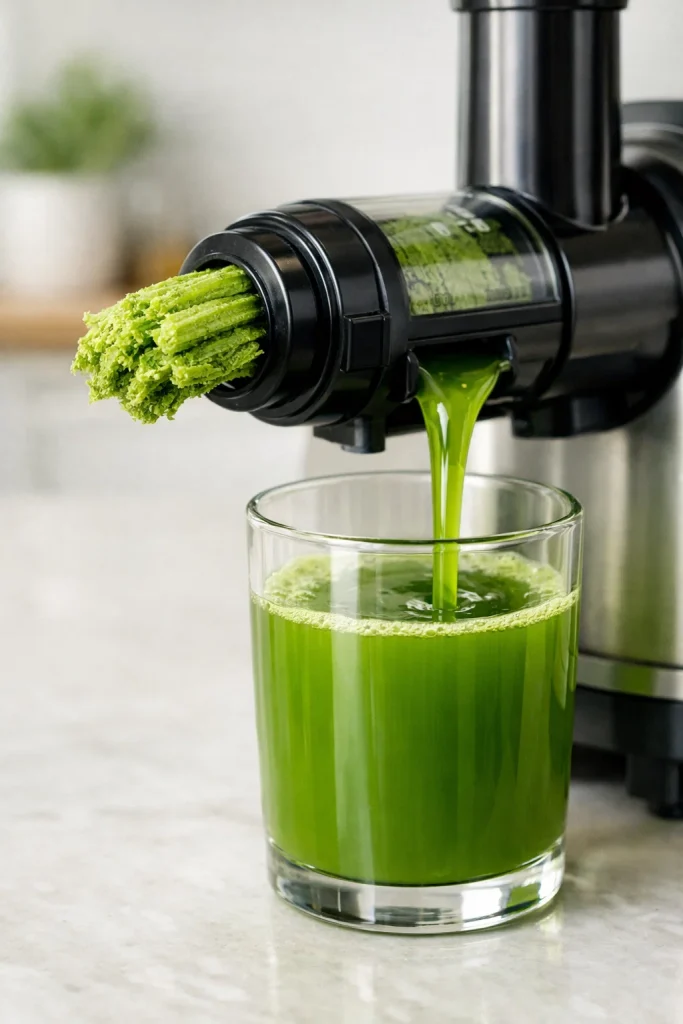
Cold press juicers, especially horizontal masticating and twin gear juicers, operate at a slow speed and are designed to handle whole stalks and even an entire bunch of celery without overheating.
This slow, gentle process helps produce fresh celery juice with a longer shelf life and better nutrient retention.
The efficiency of a cold press masticating juicer means you get a higher juice yield from celery, which is important if you’re making celery juice every day or drinking celery juice as part of a daily routine.
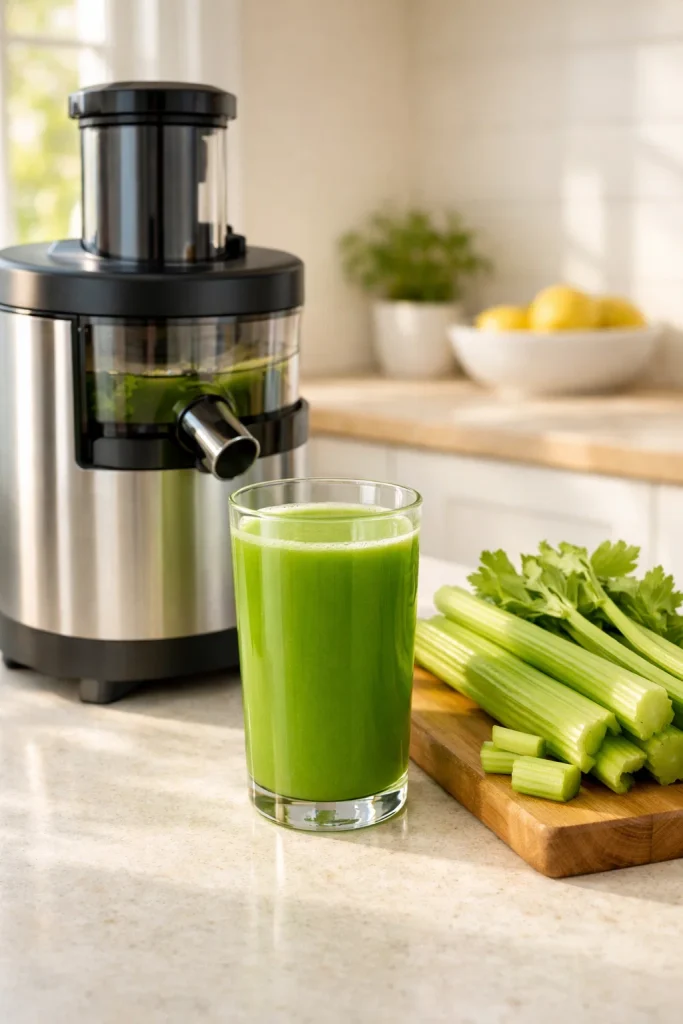
Juicers are ideal for producing the best celery juice because they are designed to handle celery’s unique structure, resulting in a smoother green juice with less pulp and a more consistent texture.
When it comes to juicing celery, it’s best to use the right juicer type so you can enjoy fresh celery juice immediately, with maximum benefits of celery juice and minimal cleanup.
While both juicers and blenders can help you make celery juice, they serve different purposes and yield different results. If you want clear, nutrient-rich juice, a juicer is the way to go. It extracts the juice while leaving the pulp behind, giving you a smooth drink. On the other hand, a blender will blend the entire celery stalk, creating a thicker, more fibrous drink that retains all the fiber.
| Feature | Juicer | Blender |
|---|---|---|
| Texture | Smooth | Thick and fibrous |
| Pulp Residue | Little to none | Much pulp |
| Nutrient Extraction | High | Moderate |
There are so many juicers on the market these days and choosing the right celery juicer can make a significant difference in the quality of your juice. When searching for the best juicer for celery, consider these types of celery juicers:
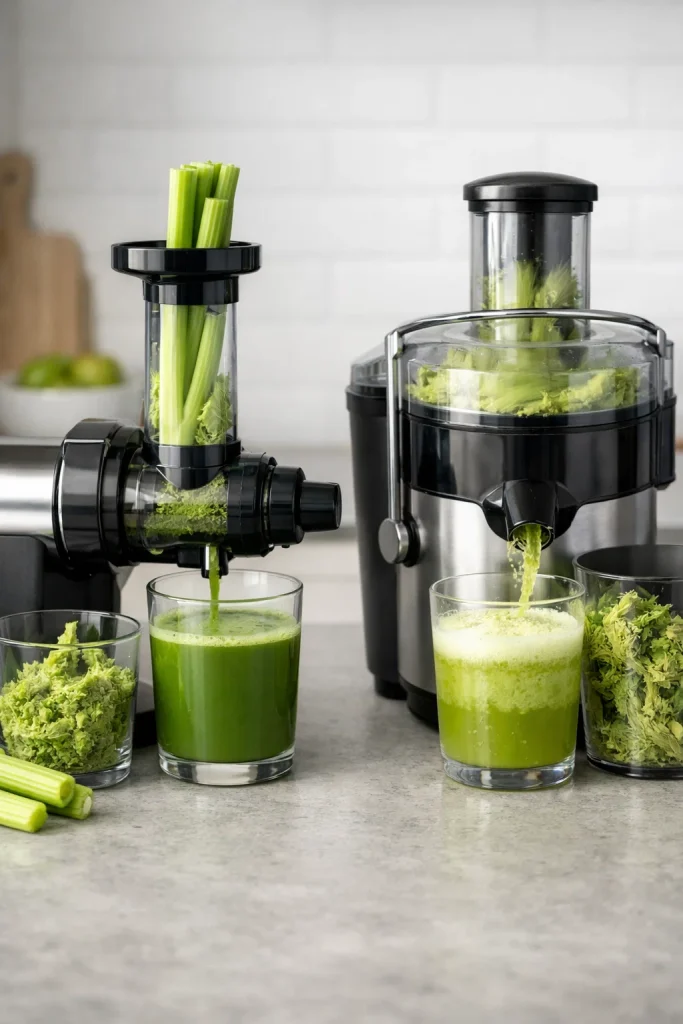
If you’re deciding between a slow juicer and a centrifugal juicer for celery, it’s essential to understand their differences in extraction and nutrient preservation.
A slow juicer, also known as a masticating juicer, operates at a lower speed, which helps maintain the nutrients and enzymes in celery. This means you’ll get a richer flavor and a higher juice yield.
On the other hand, a centrifugal juicer processes celery quickly, but it generates heat, which can degrade some nutrients. While you might appreciate the speed of a centrifugal juicer, you may sacrifice some health benefits.
Ultimately, if you’re focused on maximizing nutrient retention and getting the best juice quality, a slow juicer is the better option for your celery juice needs.
When you’re in the market for the best cold press masticating juicer for celery, it’s crucial to consider factors like juice yield, nutrient retention, and ease of use.
A quality cold press juicer can make all the difference in your juicing experience. Here are four key features to look for:
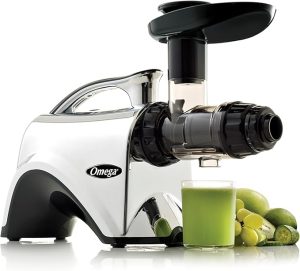
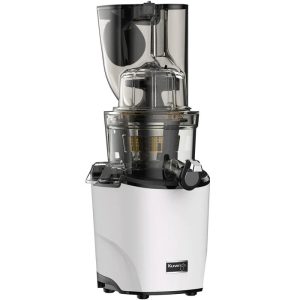
In conclusion, choosing the right juicer for celery can make all the difference in extracting those vital nutrients and flavors. Whether you opt for a slow juicer (get instant savings on a Nama juicer) or a centrifugal model, it’s essential to consider your needs and preferences.
A cold press masticating juicer is often the best choice for preserving the health benefits of celery juice. So, make an informed decision, and enjoy the refreshing taste and health perks of freshly juiced celery.